
Your screen, composed for the moment.
Embreon is a personal AI assistant. In the morning, it prepares your briefing. While you work, it steps back. And before acting for you, it asks for your OK.
A day with Embreon
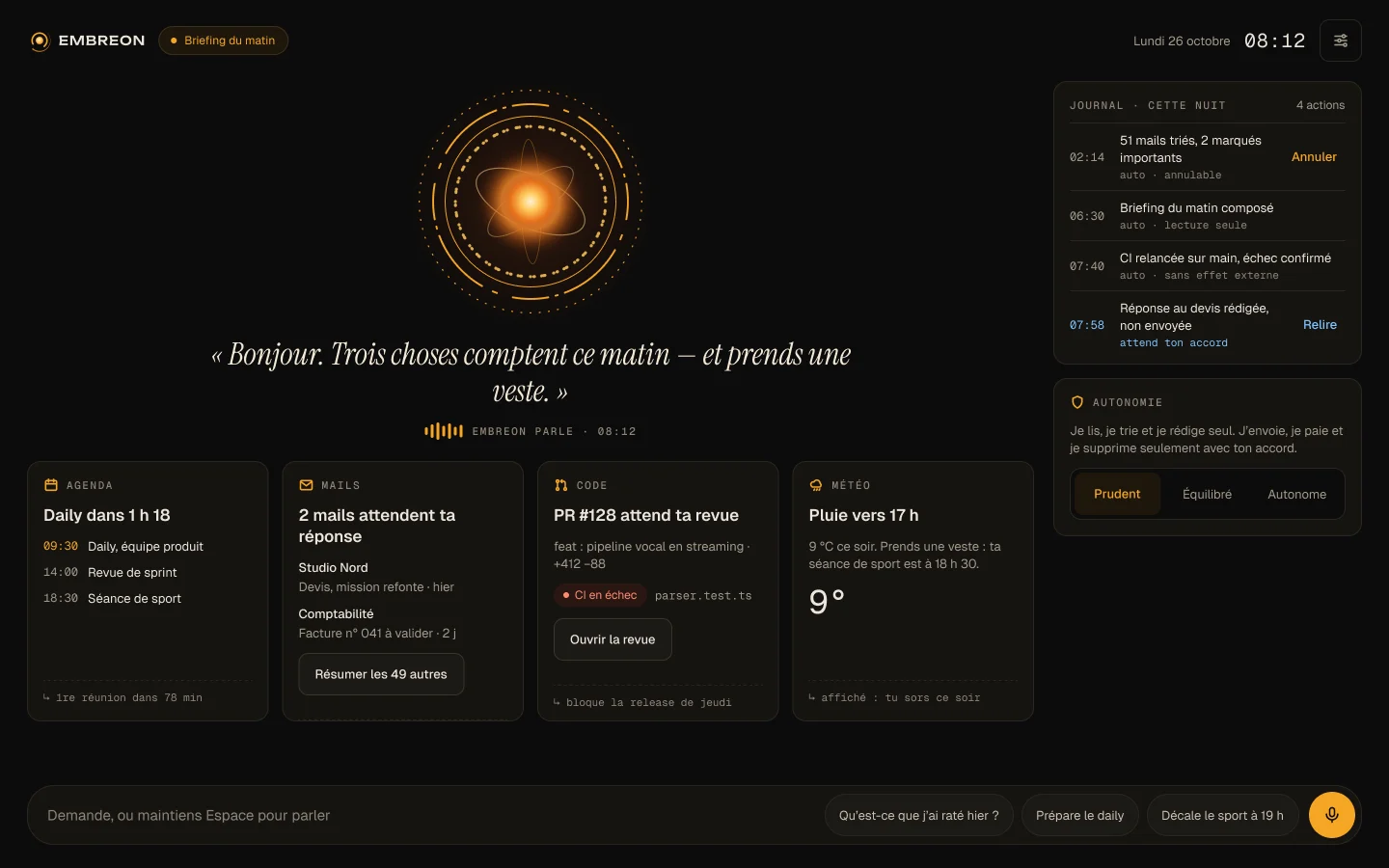
In the morning, it composes your briefing.
Calendar, emails to answer, pending pull requests, weather: Embreon builds the screen around what matters today, and every card says why it’s there.
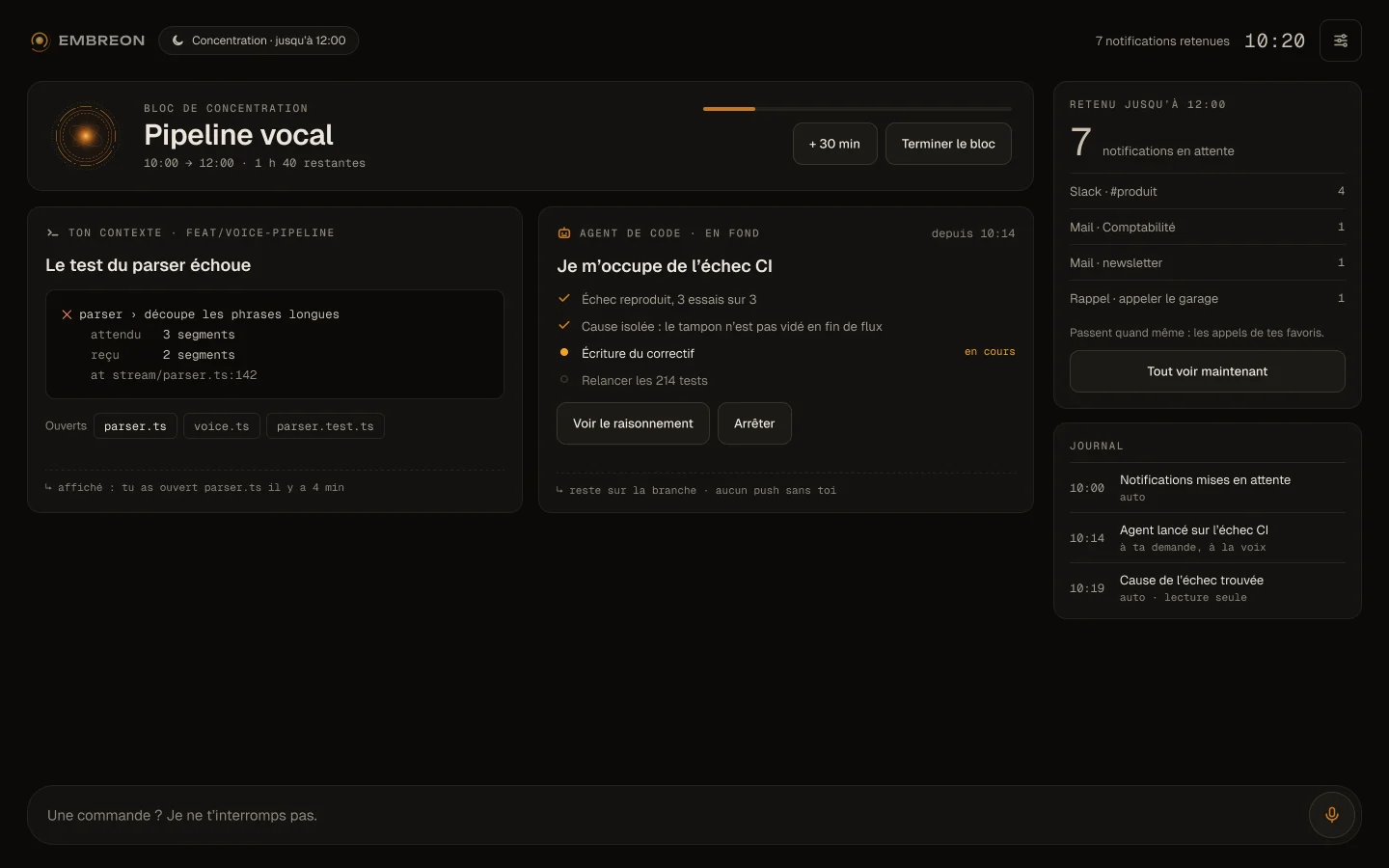
While you work, it steps back.
It keeps your context in view, holds notifications until your focus block ends and fixes the failing CI in the background, without pushing anything without you.
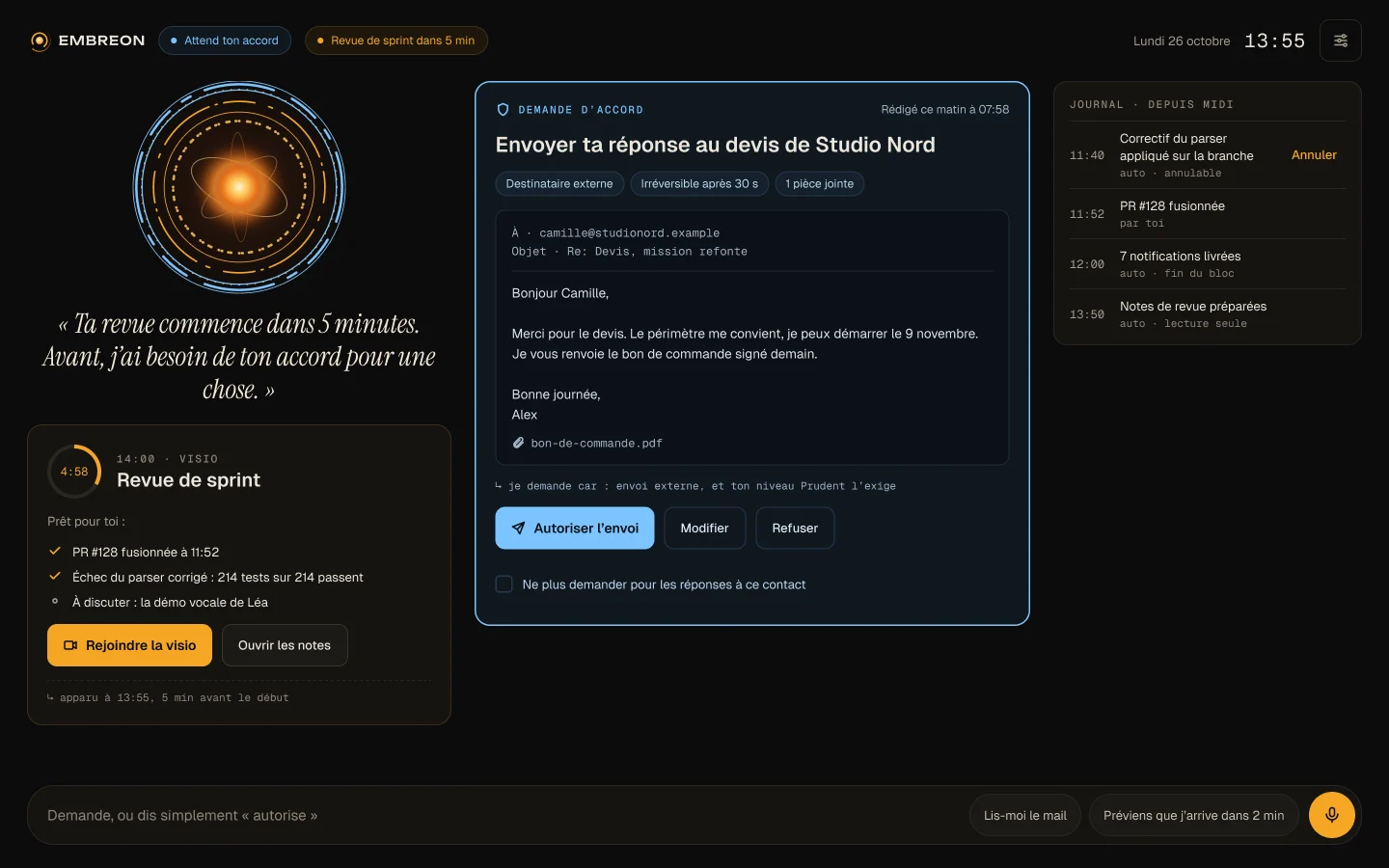
Before acting for you, it asks.
An email going outside? It shows you the draft, explains why it’s asking, then gives you 30 seconds to undo after you approve.
You stay in control
An assistant that acts for you has to be easy to control. Four rules, from the first version.
- Everything is logged.
- Every action goes into a log, with the time and the reason.
- You set the autonomy.
- Careful, Balanced or Autonomous: you choose what it does on its own.
- Nothing leaves without your OK.
- Emails, messages, payments: in Careful mode, it always asks.
- What can be undone, can be undone.
- Reversible actions keep their Undo button, right in the log.
Built in public
I’m Alistair, a developer. I’m building Embreon episode by episode, and the code will be open source.